Introduction
If you’ve been working with rooftop fall protection for any length of time, you’ll know the frustration of navigating unclear standards. Until recently, permanent counterweighted guardrail systems existed in something of a regulatory grey area – caught between temporary edge protection standards and permanently fixed barrier codes.
That changed with BS 13700:2021.
Released in July 2021, this British Standard finally provides the definitive framework for permanent counterweighted guardrail systems (PCGS). But here’s what we’ve learned from working with clients across various sectors: simply knowing the standard exists isn’t enough. Understanding what it actually demands – and more importantly, what it means for your installations – requires diving into the technical details.
Why BS 13700 Matters Now
Before BS 13700, we had a patchwork approach. BS EN 13374 covered temporary systems, while BS 6180 addressed permanently fixed barriers. But what about permanent systems that aren’t structurally fixed? Those fell through the cracks.
This gap created real problems. Duty holders struggled with compliance uncertainty, manufacturers faced varying interpretation of requirements, and safety professionals couldn’t point to clear guidance when specifying systems. We’ve seen the consequences firsthand – installations that looked adequate but failed to meet unwritten expectations during inspections.
BS 13700 fills that void by establishing clear requirements for free-standing permanent guardrails that rely on mass and friction rather than structural fixings.
The Technical Requirements That Matter
Perhaps the most significant change BS 13700 brings is the mandatory requirement for site-specific wind speed calculations. This isn’t a box-ticking exercise – it’s fundamental to system integrity.
Every installation now requires calculations based on:
- Geographic location – wind zones vary significantly across the UK
- Building height – exposure increases with elevation
- Exposure category – urban vs rural environments create different wind loading scenarios
The calculations must conform to BS EN 1991-1-4:2005+A1:2010 wind loading criteria. This means manufacturers can no longer rely on generic load ratings. Each installation becomes a specific engineering exercise.
From our experience implementing these requirements, the wind calculation process typically reveals that many existing installations were under-specified for their actual operating environment. It’s not uncommon to discover that a system adequate for a sheltered urban rooftop would be dangerously inadequate on an exposed industrial facility.
System Technical File requirements
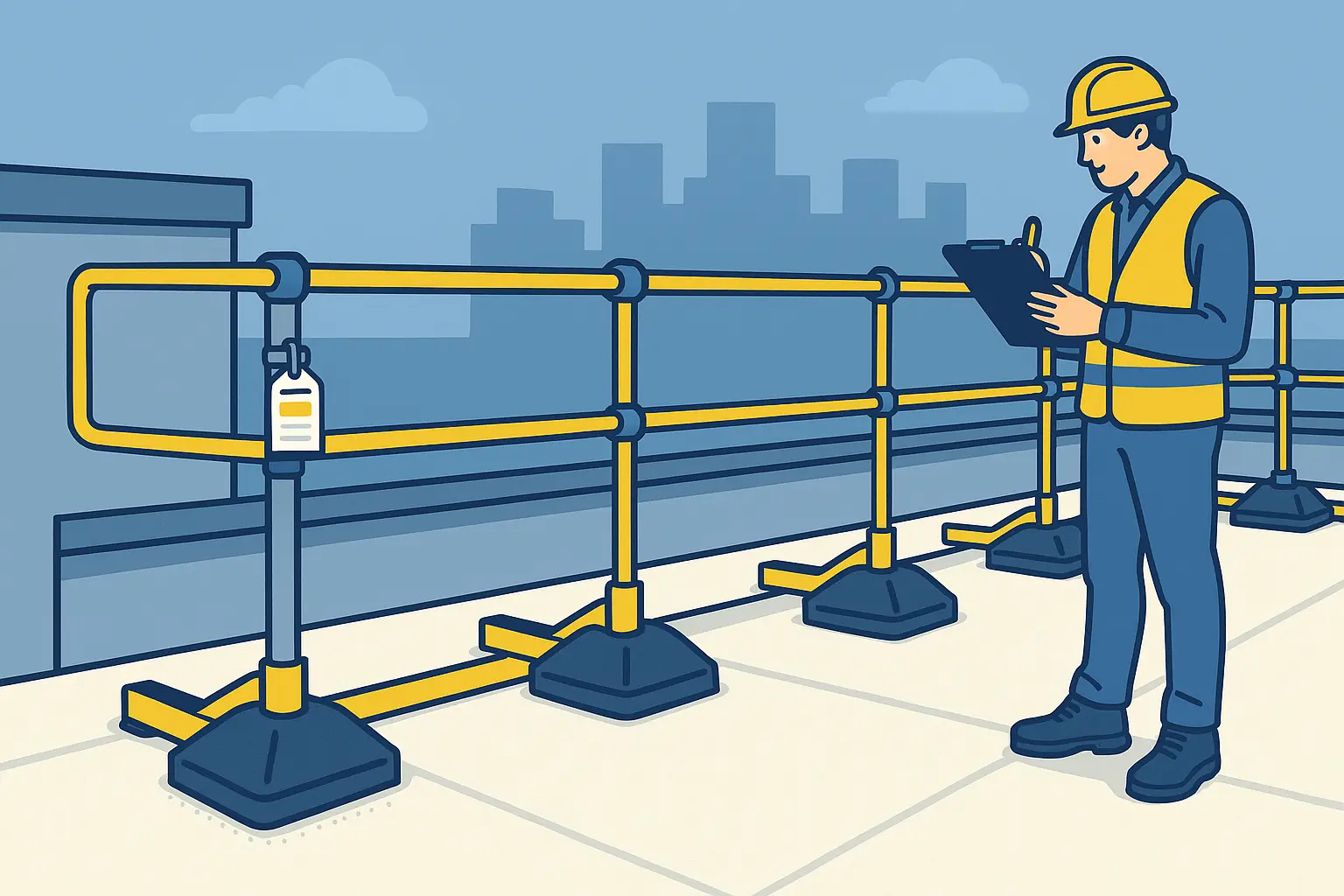
BS 13700 introduces the concept of a System Technical File – essentially a comprehensive dossier for each installation. This must include:
| Document Component | Purpose | Compliance Impact |
|---|---|---|
| System design and layout | Documents configuration and component arrangement | Enables verification of installation against design intent |
| Design calculations | Demonstrates structural adequacy under loading | Required for engineering sign-off and liability |
| Wind speed calculations | Validates system suitability for site conditions | Mandatory for BS 13700 compliance |
| Installation instructions | Ensures correct assembly and positioning | Critical for maintaining design performance |
The Technical File serves multiple functions beyond compliance. It becomes the reference point for inspections, modifications, and eventual system replacement. More importantly, it demonstrates due diligence – something increasingly crucial in today’s liability landscape.
Performance Specifications
BS 13700 establishes clear performance criteria that counterweighted systems must meet. These go beyond simple load ratings to encompass:
- Stability requirements: The system must remain stable under both vertical and horizontal loading without relying on structural fixings. This places significant emphasis on base design and weight distribution.
- Deflection limits: Unlike temporary systems that may allow greater movement, permanent installations must maintain minimal deflection under normal loading to preserve user confidence and system integrity over time.
- Material specifications: The standard specifies material requirements for components exposed to weather conditions, addressing the long-term durability expectations of permanent systems.
The Inspection & Certification Regime
Annual recertification requirements
BS 13700 introduces mandatory annual recertification for all permanent counterweighted guardrail installations. This represents a significant shift from previous practice where many systems went years without formal inspection.
The annual inspection must address:
- Physical condition of all components
- System configuration against original design
- Validity of wind speed calculations
- Compliance with current standard requirements
What catches many duty holders off-guard is the requirement to reassess wind calculations annually. Environmental conditions change – nearby buildings alter wind patterns, modifications affect exposure, and the calculations themselves may need updating as standards evolve.
Examination scheme structure
The standard introduces a formal examination scheme with standardized reporting categories. Inspections now result in one of three classifications:
- Pass: System meets all requirements with no identified deficiencies.
- Conditional Pass: Minor deficiencies identified but system remains safe for continued use with specified limitations.
- Fail: System must be taken out of service immediately due to safety concerns.
This three-tier approach provides clarity for both inspectors and duty holders, eliminating the ambiguity that previously existed around inspection outcomes.
Inspection & Recertification
For Inspection & Recertification from Universal Safety Systems, click the link.
Practical Implications For Different Sectors
For Health and Safety managers
BS 13700 fundamentally changes how you approach permanent guardrail procurement and management. Budget planning must now account for:
- Initial wind calculation costs (typically £500-£1,500 per site)
- Annual inspection and recertification fees
- Potential system upgrades where existing installations don’t meet new requirements
The liability implications are equally significant. With clear technical standards now established, demonstrating compliance becomes both easier and more critical. Non-compliance with BS 13700 requirements could significantly complicate any incident investigation.
For H&S operatives
From an operational perspective, BS 13700 provides the clear guidance that many of you have been seeking. When specifying new systems or assessing existing installations, you now have definitive criteria to reference.
Key operational changes include:
- Requiring Technical Files from suppliers before accepting installations
- Ensuring annual inspection schedules include wind calculation reviews
- Maintaining documentation trails that demonstrate ongoing compliance
Implementation Challenges We’re Seeing
Working with clients transitioning to BS 13700 compliance, several common challenges emerge:
- Legacy system compliance: Existing installations often lack the documentation required under BS 13700. Retrofitting Technical Files requires engineering assessment and sometimes system modification.
- Wind calculation complexity: Many organisations underestimate the technical expertise required for accurate wind speed calculations. Generic online calculators don’t meet BS 13700 requirements.
- Inspector availability: The demand for qualified inspectors familiar with BS 13700 requirements currently exceeds supply, potentially creating scheduling challenges for annual recertification.
Our Weighted Anchor System Approach
At Universal Safety Systems, we’ve designed our weighted anchor systems specifically to meet BS 13700 requirements from the ground up. Rather than adapting existing products, we’ve engineered solutions that inherently comply with the new standard’s technical demands.
Our approach addresses the key BS 13700 requirements through:
- Integrated wind calculation service: We provide site-specific wind calculations as part of every installation, using qualified structural engineers familiar with BS EN 1991-1-4 requirements.
- Comprehensive Technical Files: Every system delivery includes a complete Technical File formatted to BS 13700 requirements, eliminating the documentation challenges many clients face.
- Annual inspection service: We offer BS 13700-compliant annual inspections conducted by certified personnel, ensuring ongoing compliance without the hassle of sourcing qualified inspectors.
WeightAngel Weighted Anchor System
For specifications, testing and installation guidance on the WeightAngel Weighted Anchor System from Universal Safety Systems, click the link.
Looking Ahead: Enforcement & Evolution
While BS 13700 became available in July 2021, enforcement patterns are still developing. However, we’re already seeing increased scrutiny from HSE inspectors who now have clear technical standards to reference.
Insurance providers are also taking notice. Several major insurers have begun requesting BS 13700 compliance documentation as part of policy renewals for properties with rooftop access requirements.
The standard itself will likely evolve based on industry experience. The BSI committee responsible for BS 13700 continues to monitor implementation challenges and may issue amendments to address practical concerns that emerge.
Action points for compliance
If you’re responsible for permanent counterweighted guardrail systems, immediate action steps include:
- Audit existing installations: Determine which systems fall under BS 13700 scope and assess current compliance status
- Establish Technical Files: For compliant systems lacking documentation, commission retrospective Technical Files
- Schedule wind calculations: Arrange site-specific wind assessments for all permanent counterweighted installations
- Plan inspection schedules: Establish annual inspection routines with qualified personnel
- Budget for compliance: Factor ongoing BS 13700 costs into facility management budgets
The Bottom Line
BS 13700 represents more than just another standard to navigate – it’s the industry finally getting the technical clarity we’ve needed for permanent counterweighted guardrail systems. Yes, it introduces new costs and complexity, but it also provides the definitive framework for specifying, installing, and maintaining these critical safety systems.
For those willing to embrace the requirements, BS 13700 compliance offers significant advantages: clearer liability positions, improved safety outcomes, and confidence that installations meet recognized technical standards.
The transition period is effectively over. New installations must comply with BS 13700, and existing systems face increasing scrutiny against its requirements. The question isn’t whether to comply – it’s how quickly you can achieve and maintain compliance while minimizing operational disruption.
At Universal Safety Systems, we’re committed to helping our clients navigate this transition effectively. Our weighted anchor systems are designed from the ground up to meet BS 13700 requirements, and our technical team can provide the calculations, documentation, and ongoing support needed for full compliance.
Need help understanding how BS 13700 affects your specific installations? Contact our technical team for a consultation tailored to your facility’s requirements.
This article was published by Universal Safety Systems, specialists in weighted anchor systems for permanent fall protection. For technical guidance on BS 13700 compliance, contact our engineering team.