
Introduction
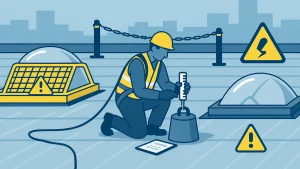
BS 7883:2019 provides recommendations for the design, installation, use, maintenance and inspection of anchor systems incorporating anchor devices. It applies to systems used for the direct attachment of personal fall protection systems in the workplace.
For duty holders, the standard provides a structured framework for managing these systems throughout their operational life. This includes confirming that they have been properly designed and installed, ensuring the correct documentation is available and arranging suitable inspection and maintenance.
Understanding these responsibilities before signing off an installation helps protect those working at height and provides a clear record of how the system should be used, examined and maintained.
Understanding Your Role as Duty Holder
BS 7883:2019 places significant responsibility on duty holders—that’s likely you if you have control over premises where fall protection systems are installed. The standard defines this clearly: you’re responsible for ensuring systems remain safe, properly maintained, and compliant throughout their operational life.
This isn’t just a tick-box exercise. Under the Working at Height Regulations 2005 and PUWER 1998, you have legal obligations that BS 7883 helps you fulfil. Get it wrong, and you’re not just facing HSE enforcement—you’re potentially liable for any incidents that occur.
The critical shift in the 2019 revision is the introduction of the “System Designer” role and comprehensive documentation requirements. These changes mean that many installations completed before 2019 may need significant documentation upgrades to meet current standards.
Understanding where fall protection systems fit within the broader work at height hierarchy is also crucial for ensuring BS 7883 compliance aligns with your overall safety strategy.
Essential Documentation: Your Compliance Toolkit
The System Technical File: Your System’s Birth Certificate
Before you sign off any installation, you must receive a comprehensive System Technical File from your installer. This isn’t optional—it’s a mandatory requirement under BS 7883:2019. The file must contain:
| Document Component | What It Must Include | Why It Matters |
|---|---|---|
| System Design Specification | Layout drawings, component specifications, intended use parameters | Defines exactly what was installed and its operational limits |
| Design Calculations | Structural load calculations, anchor force determinations, safety factors | Proves the system can handle the loads it will face |
| Installation Details | Structural anchor specifications, fixing methods, material details | Enables future inspections and modifications |
| Hidden Element Documentation | Photos and details of concealed fixings, structural connections | Critical for future inspections when elements can’t be visually accessed |
| Test Certificates | Factory test certificates, installation test results, commissioning records | Demonstrates compliance with performance standards |
At Universal Safety Systems, our Roof Angel installations include comprehensive Technical Files as standard. We’ve seen too many situations where duty holders accept installations without proper documentation, only to face compliance issues during later inspections.
The Examination Scheme for Inspection
You must also receive an Examination Scheme that outlines:
- Inspection frequency requirements (typically annual minimum)
- Specific inspection points and procedures
- Pass/fail criteria for ongoing certification
- Maintenance requirements and schedules
Without this scheme, your inspector won’t know what to look for or how to assess your system properly.
Operation and Maintenance Manual
The O&M Manual provides practical guidance for:
- Safe system usage procedures
- User training requirements
- Routine maintenance tasks
- Emergency procedures and rescue plans
This document bridges the gap between installation and day-to-day operation, ensuring users understand both capabilities and limitations of the system.
The New Inspection Regime: What Changed
The 2019 revision introduced a more rigorous inspection framework with clear outcome categories that directly affect your operational decisions.
Understanding Inspection Results
BS 7883:2019 provides four categories for recording the outcome of an anchor system inspection:
| Inspection Outcome | Assessment Criteria | Required Action |
|---|---|---|
| Pass | The system satisfies all relevant recommendations. | The anchor system and associated personal fall protection equipment can remain in service. The next inspection should be completed within the required time frame. |
| Conditional Pass | The system satisfies the recommendations of an earlier standard or code of practice and does not represent an immediate safety concern, but it does not meet all the recommendations of BS 7883:2019. | The system may remain in service. The duty holder should receive an inspection report detailing the required remedial work and an appropriate completion timescale. |
| Conditional Fail | The system may satisfy an earlier standard, but it represents an immediate safety concern that is capable of being corrected. | Take the system out of service until the remedial work has been completed and the system has been reinspected. |
| Fail | The system does not satisfy the relevant recommendations and represents an immediate safety concern that is beyond reasonable improvement or repair. | Take the system out of service, label it “Do Not Use” and decommission it where appropriate. Replacement or complete redesign may be required. |
A conditional result must not be ignored. The inspection report should clearly identify the problem, the remedial work required and the timeframe for completion. Systems receiving a Conditional Fail or Fail outcome must not return to service until the appropriate action has been taken.
What This Means for Your Operations
The conditional categories are particularly significant for duty holders. They provide a structured pathway for addressing deficiencies while maintaining operational flexibility where possible.
However, you cannot ignore conditional outcomes. Failing to address identified issues within specified timeframes can result in a “fail” classification at the next inspection, potentially leaving you without fall protection when you most need it.
System Designer Requirements: A New Layer of Accountability
BS 7883:2019 introduces the “System Designer” role—someone responsible for selecting, specifying, and positioning fall protection equipment. If your installer is making decisions about what equipment to use and where to place it, they become the System Designer with additional responsibilities.
This has implications for your procurement process:
- Ensure installers understand their System Designer responsibilities
- Verify they have appropriate competency for this role
- Confirm they’ll provide all required System Designer documentation
At Universal Safety Systems, we embrace the System Designer role for our Roof Angel installations. Our engineering team works closely with duty holders to ensure systems are properly designed for their specific operational requirements while meeting all BS 7883:2019 obligations.
Pre-Installation Requirements: Your Due Diligence Checklist
Before any work begins, you must ensure several key requirements are addressed:
Structural Assessment
The supporting structure must be capable of handling the imposed loads. This requires:
- Structural survey of the installation area
- Load calculations specific to your building and roof type
- Verification of anchor fixing capacity
- Documentation of structural adequacy
For our Roof Angel systems, we conduct comprehensive structural assessments as part of our installation process. Our calculations ensure the building can safely support the system under all anticipated loading conditions, including fall arrest scenarios.
Risk Assessment and Method Statements
Your installer must provide:
- Detailed risk assessment for the installation work
- Method statements showing how safety will be maintained during installation
- Emergency procedures for the installation period
User Competency Planning
Consider who will use the system and ensure:
- Appropriate training is planned
- User competency levels match system complexity
- Ongoing training requirements are understood
Maintenance Planning: Beyond the Annual Inspection
BS 7883:2019 emphasises ongoing maintenance, not just periodic inspection. As the duty holder, you’re responsible for:
Pre-Use Inspections
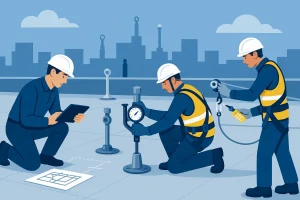
Every time someone uses the system, they should conduct a basic visual inspection checking for:
- Obvious damage or wear
- Loose connections or fixings
- Corrosion or deterioration
- Proper system configuration
Interim Inspections
Between annual certifications, you should arrange more detailed inspections if:
- The system experiences unusual loading (such as a fall event)
- Environmental conditions change significantly
- Structural modifications affect the installation area
- Damage is suspected or reported
Supplementary Inspections
Additional inspections may be required following:
- Severe weather events
- Building modifications
- Changes in system usage patterns
- Incident investigations
The Cost of Non-Compliance: Why Documentation Matters
We’ve worked with numerous clients who inherited installations lacking proper BS 7883:2019 documentation. The costs of rectifying these situations can be substantial:
- Reverse Engineering: Investigating hidden elements to create missing Technical Files can cost £2,000-£5,000 per system
- System Modifications: Upgrading non-compliant installations often costs 40-60% of new installation prices
- Operational Disruption: Taking systems out of service while addressing deficiencies can severely impact building maintenance schedules
- Liability Exposure: Inadequate documentation significantly complicates incident investigations and insurance claims
Technology Types Under BS 7883:2019
BS 7883:2019 addresses five common types of anchor system. Duty holders should understand which type is installed because the design, installation, documentation and inspection requirements can vary.
| Type | Description |
|---|---|
| Type A | A permanently fixed anchor system incorporating one or more structural anchors, such as an eyebolt. |
| Type B | A removable and transportable anchor that does not incorporate a structural anchor and is not permanently fixed to the structure. |
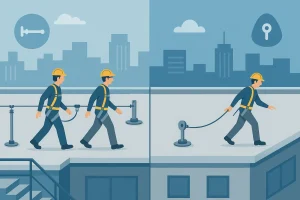
| Type C | A structurally anchored system incorporating a flexible anchor line, such as wire rope, fibre rope, or webbing. Horizontal lifeline systems commonly fall within this category. |
| Type D | A structurally anchored system incorporating a rigid anchor line, typically formed from a rail or tube. |
| Type E | An anchor device that relies on its mass and friction with the load-bearing surface rather than permanent structural fixings. |
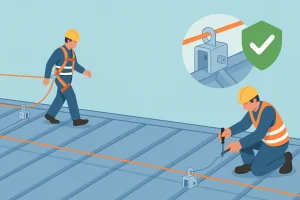
The Roof Angel horizontal lifeline is a Type C system. Its flexible anchor line allows users to move along a defined route while remaining connected to the system. As with any anchor system, it’s suitability must be established through competent design and supported by the correct installation, inspection and handover documentation.
Quality System Requirements: Your Installer’s Credentials
BS 7883:2019 places significant emphasis on installer competency and quality systems. Before engaging any contractor, verify they maintain:
- Appropriate quality management systems (ISO 9001 or equivalent)
- Competency certification for the specific system types being installed
- Professional indemnity insurance covering System Designer responsibilities
- Track record with BS 7883:2019 compliant installations
Universal Safety Systems maintains full ISO 9001 quality certification and provides comprehensive professional indemnity coverage for all our System Designer activities. Our complete range of fall protection products is designed to meet current standards from initial specification through ongoing maintenance.
Emergency Planning: The Often-Overlooked Requirement
BS 7883:2019 requires consideration of rescue procedures for fall arrest systems. As the duty holder, you must ensure:
Rescue Plan Documentation
- Written procedures for rescuing suspended personnel
- Equipment requirements for rescue operations
- Training requirements for rescue personnel
- Contact details for emergency services
Suspension Trauma Awareness
- Understanding of suspension trauma risks
- Time-critical nature of rescue operations
- First aid requirements for rescued personnel
Regular Rescue Drills
Many duty holders overlook this requirement, but rescue plan effectiveness must be regularly tested through:
- Desktop exercises reviewing procedures
- Practical rescue drills (where safe to do so)
- Equipment checks and maintenance
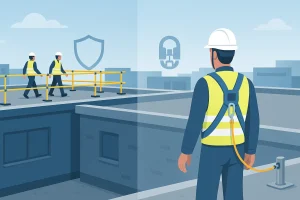
Remember that BS 7883 systems are just one component of comprehensive fall protection strategies. Where feasible, collective protection measures such as guardrails should be considered first, in line with the work at height hierarchy.
Integration with Other Safety Standards
BS 7883:2019 doesn’t operate in isolation. Your fall protection systems must integrate with:
CDM Regulations
Construction Design and Management requirements affect:
- Design consideration for maintenance access
- Health and safety file requirements
- Principal Designer and Principal Contractor responsibilities
Building Regulations
Compliance with relevant building regulations ensures:
- Appropriate access for maintenance
- Integration with building safety systems
- Consideration of ongoing operational requirements
Understanding how these standards interact helps ensure comprehensive compliance rather than piecemeal approaches that leave gaps.
Practical Implementation Strategy
Based on our experience helping duty holders achieve BS 7883:2019 compliance, we recommend this structured approach:
Phase 1: System Audit
- Inventory all fall protection systems
- Assess current documentation against BS 7883:2019 requirements
- Identify systems requiring immediate attention
Phase 2: Gap Analysis
- Determine documentation gaps for each system
- Assess structural adequacy of existing installations
- Plan remedial work priorities based on risk and operational impact
Phase 3: Documentation Development
- Commission missing Technical Files
- Develop Examination Schemes for all systems
- Create Operation and Maintenance Manuals
Phase 4: Inspection and Certification
- Arrange comprehensive inspections to current standards
- Address any identified deficiencies
- Establish ongoing inspection schedules
The Commercial Reality: Budgeting for Compliance
Achieving BS 7883:2019 compliance requires realistic budget planning. Based on our client experience, typical costs include:
- Technical File Development: £800-£2,500 per system depending on complexity
- Annual Inspections: £300-£800 per system per year
- System Upgrades: 30-50% of new installation costs for significant modifications
- Training Requirements: £200-£500 per user for comprehensive competency development
However, these costs must be weighed against the risks of non-compliance: HSE enforcement, insurance implications, and most importantly, the human cost of inadequate fall protection.
Working with the Right Partners
The complexity of BS 7883:2019 means choosing experienced, competent partners is crucial. Look for:
Technical Competency
- Demonstrated understanding of all five system types
- Experience with System Designer responsibilities
- Structural engineering capabilities for load calculations
Documentation Excellence
- Track record of comprehensive Technical File preparation
- Understanding of inspection and maintenance requirements
- Integration with other safety management systems
Ongoing Support
- Annual inspection services
- Technical support for operational questions
- System modification and upgrade capabilities
At Universal Safety Systems, we’ve structured our services specifically to support duty holders through the complete BS 7883:2019 compliance process. From initial system design through ongoing maintenance, we provide the technical expertise and documentation support needed for confident compliance.
Looking Forward: Enforcement Trends
While BS 7883:2019 has been available since November 2019, enforcement patterns continue to evolve. We’re seeing:
- Increased HSE scrutiny of system documentation
- Insurance providers requesting BS 7883:2019 compliance evidence
- Greater emphasis on System Technical File completeness during investigations
- More rigorous inspection standards from competent persons
This trend suggests that robust compliance with BS 7883:2019 requirements will become increasingly important for operational continuity.
Your Action Plan
If you’re responsible for rooftop fall protection systems, immediate priorities should include:
- Document Current Status: Assess what documentation exists for each system against BS 7883:2019 requirements
- Identify Critical Gaps: Prioritise systems with inadequate documentation or overdue inspections
- Engage Competent Support: Work with experienced partners who understand current requirements
- Plan Investment: Budget for both immediate compliance needs and ongoing maintenance requirements
- Establish Procedures: Create management systems that maintain compliance over time
The shift to BS 7883:2019 represents more than regulatory compliance—it’s about creating genuinely safer working environments backed by rigorous technical standards. The documentation requirements, while initially seeming bureaucratic, provide the evidence trail that protects both workers and duty holders.
Understanding how BS 7883 integrates with other safety standards, such as BS 13700 for permanent counterweighted guardrails, ensures comprehensive compliance across all your fall protection systems.
Remember: signing off a roof installation isn’t the end of your responsibilities—it’s the beginning of an ongoing commitment to maintaining safe systems for everyone who depends on them.
For duty holders seeking comprehensive BS 7883:2019 compliance support, our technical team at Universal Safety Systems provides everything from initial system design through ongoing inspection and maintenance. Our horizontal lifeline systems are designed from the ground up to meet current standards, complete with all required documentation and ongoing support services.
We also provide comprehensive inspection and recertification services to ensure your systems remain compliant throughout their operational life.
Related Reading
- Horizontal Lifelines Explained: EN 795 Class C vs Class A—and when to use each – Understanding the technical differences between horizontal lifeline classifications
- Guardrails vs Lifelines: Applying the Work at Height Hierarchy in Practice – Choosing the right fall protection approach for your application
- BS 13700 Explained: The Standard for Permanent Counterweighted Guardrails – Comprehensive guide to the newest guardrail standard
- Horizontal Lifeline Systems – Product specifications and technical details for our Roof Angel system
- Single Point Anchorages & Abseil Points – Product specifications for Type A anchor systems
- Guardrail Systems – Explore our GuardAngel collective protection solutions
- Inspection & Recertification Services – Professional inspection services for BS 7883 compliance
- Contact Universal Safety Systems – Get expert guidance on BS 7883:2019 compliance for your installations
Universal Safety Systems specialises in BS 7883:2019 compliant fall protection systems. Our Roof Angel horizontal lifelines include comprehensive System Technical Files, ongoing inspection services, and full System Designer support. For guidance on achieving compliance with your existing or planned installations, contact our technical team.