Introduction
Standing seam metal roofs present both an opportunity and a challenge for fall protection professionals. The opportunity lies in their inherent strength and the availability of non-penetrative attachment systems. The challenge? Getting it right requires understanding far more than simply bolting clamps to seams.
We’ve installed hundreds of fall protection systems on standing seam roofs over the past two decades, and the learning curve never stops. Each project teaches us something new about seam compatibility, load distribution, or installation nuances that separate successful systems from expensive failures.
The rise of S-5® clamp technology revolutionised how we approach standing seam installations. But here’s what we’ve discovered: having the right clamps is only the beginning. Success depends on proper system design, meticulous installation procedures, and understanding how different seam profiles interact with various loading conditions.
Understanding Standing Seam Roof Systems
Standing seam metal roofing represents one of the most versatile and durable roofing systems available, but not all standing seams are created equal. The variations in seam profiles, panel gauges, and connection methods significantly affect how fall protection systems can be safely attached.
Seam Profile Variations
The two primary standing seam configurations we encounter create distinctly different attachment scenarios:
- Bulb Type Seams: These feature a rounded, continuous seam created by crimping the panel edges together. The bulb profile provides excellent strength but requires specific clamp designs that accommodate the curved geometry.
- Rolled Type Seams: Created by rolling the panel edges together, these seams offer a different clamping surface and typically allow for more varied attachment options.
Each profile type demands specific S-5® clamp selections. Our Roof Angel installations utilise either S-5-Z Mini clamps for bulb type seams or S-5-E Mini clamps for rolled type configurations, ensuring optimal compatibility and performance.
Material Considerations
Standing seam panels come in various materials and gauges, each affecting attachment strength and system design:
| Material Type | Typical Gauge | Considerations |
|---|---|---|
| Galvanised Steel | 22-26 gauge | Most common, excellent clamp compatibility |
| Aluminium | .032″-.040″ | Lighter weight, requires careful torque specifications |
| Stainless Steel | 24-26 gauge | Premium durability, higher material costs |
| Copper | 16-20 oz | Specialised applications, unique expansion characteristics |
The panel gauge significantly affects clamping strength. Our installation procedures include compatibility verification, ensuring the metal roof panel thickness matches the authorised minimum specifications for each clamp type.
S-5® Clamp Technology: The Non-Penetrative Advantage
S-5® clamps revolutionised standing seam attachments by eliminating roof penetrations whilst maintaining exceptional holding strength. The technology centres on specially designed round-point setscrews that create mechanical interlock without damaging protective coatings or compromising roof warranties.
Why Non-Penetrative Matters
Traditional roof penetrations create multiple risks:
- Breach of weather barrier integrity
- Potential void of manufacturer warranties
- Long-term maintenance requirements
- Thermal bridging and condensation issues
- Structural complexity in retrofits
S-5® clamp technology eliminates these concerns while often providing superior holding strength compared to penetrative alternatives. Independent testing demonstrates holding capacities ranging from 1,800 to over 4,000 pounds depending on seam profile and panel specifications.
Clamp Selection for Fall Protection Applications
For our horizontal lifeline systems, we primarily utilise two S-5® clamp types:
- S-5-Z Mini Clamps: Designed specifically for bulb type standing seams, these clamps feature a removable section that allows placement over existing seams. The two-piece design ensures proper seam engagement while maintaining accessibility for installation and adjustment.
- S-5-E Mini Clamps: Engineered for rolled type seams, these clamps provide secure attachment to the more angular seam profiles. The design accommodates the specific geometry whilst ensuring optimal load transfer.
Both clamp types undergo rigorous testing to verify holding capacity parallel and perpendicular to the seam direction. This bidirectional strength ensures reliable performance under the complex loading conditions experienced during fall arrest events.
Roof Angel Clamp Fix Systems: Integration Done Right
Our Roof Angel horizontal lifeline systems incorporate S-5® clamp technology through carefully engineered integration that maximises both performance and reliability.
System Components and Configuration
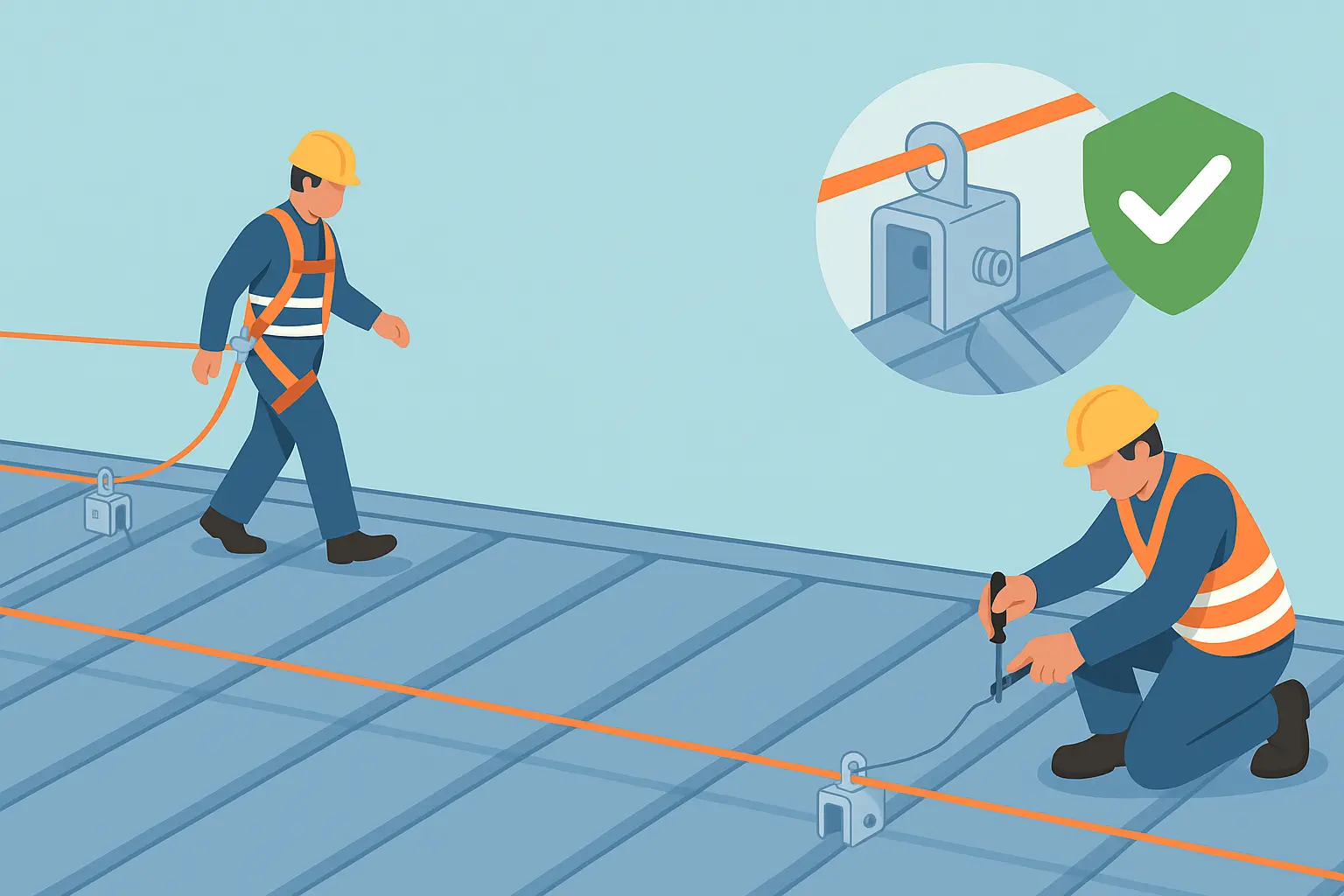
The Roof Angel Top Fix Clamp system utilises our standard base plate design integrated with four seam clamps per anchor point. This configuration distributes loading across multiple attachment points, reducing stress concentrations while ensuring redundant security.
Base Plate Integration: Our universal base plate design accommodates S-5® clamps whilst maintaining compatibility with our shock-absorbing post technology. This integration ensures that the non-penetrative advantages don’t compromise the force absorption characteristics that define Roof Angel performance.
Torque Specifications: Critical to successful installations, our specified torque values ensure optimal clamp performance:
| Material Type | Torque Range (Nm) | Torque Range (ft-lbs) |
|---|---|---|
| 22 gauge steel | 18-20 | 13-15 |
| Other metals and thinner gauges | 15-17 | 11-12.5 |
These specifications prevent over-tightening that could damage seams whilst ensuring adequate clamping force for reliable attachment.
Load Distribution Principles
Successful standing seam installations require understanding how loads transfer through the clamp-to-seam interface. The seam itself acts as a structural beam, and our clamp placement must account for:
- Seam Flexural Strength: The seam’s ability to carry loads as a beam between panel attachment points to the building structure.
- Panel Attachment Adequacy: Ensuring the panel-to-structure connection can handle loads introduced through clamp attachments.
- Load Path Continuity: Maintaining clear load paths from the lifeline system through clamps, seams, panels, and into the building structure.
Our design methodology includes verification that the roof-to-structure attachment points can handle the distributed loading from lifeline systems. In many cases, the S-5® clamp attachment proves stronger than the existing panel attachment, making the panel clips the limiting factor in system capacity.
Installation Best Practices: Getting It Right the First Time
Proper installation separates successful standing seam lifeline systems from problems waiting to happen. Our installation procedures have evolved through extensive field experience and reflect the critical factors that ensure long-term performance.
Pre-Installation Assessment
Every standing seam installation begins with comprehensive assessment:
- Seam Profile Verification: Visual and dimensional verification of seam type ensures correct clamp selection. Mismatched clamps can result in inadequate holding capacity or seam damage.
- Panel Condition Evaluation: Existing panel condition, including coating integrity and structural soundness, affects installation viability and long-term performance.
- Structural Adequacy Confirmation: Verification that the building structure can handle imposed loads from the lifeline system, including consideration of existing panel attachment adequacy.
Installation Sequence
Our proven installation sequence ensures optimal results:
- Layout and Marking: Precise marking of anchor point locations based on system design calculations and structural considerations. Proper spacing ensures load distribution whilst maintaining system geometry.
- Clamp Preparation: Pre-fitting S-5® clamps to base plates using specified hardware and ensuring proper orientation for field installation access.
- Sequential Installation: Installing clamps in sequence to maintain system alignment whilst allowing for minor adjustments during the process.
- Torque Verification: Using calibrated torque tools to achieve specified clamping forces, ensuring consistent performance across all attachment points.
- System Integration: Installing lifeline components and ensuring proper cable tension and post alignment.
Quality Assurance Measures
Our installation quality assurance includes several verification steps:
- Visual inspection of seam engagement for all clamps
- Torque verification using calibrated equipment
- System geometry verification against design specifications
- Functional testing of moving components
- Documentation of installation parameters for future reference
Common Challenges and Solutions
Years of standing seam installations have revealed several recurring challenges that require specific solutions:
Seam Damage Prevention
Standing seam integrity is paramount for both structural performance and roof warranty maintenance. Our approach includes:
- Proper Clamp Selection: Using clamps specifically designed for the encountered seam profile prevents damage from improper fit or excessive stress concentration.
- Coating Protection: S-5® clamps utilise specially polished, round-point setscrews that preserve delicate panel finishes and coatings, maintaining warranty compliance.
- Installation Technique: Proper installation technique prevents seam distortion or damage during clamp installation.
Thermal Movement Accommodation
Standing seam roofs accommodate significant thermal movement through their design. Fall protection systems must not interfere with this movement:
- Clamp Design: S-5® clamps accommodate normal thermal movement without binding or creating stress concentrations.
- System Layout: Our lifeline layouts account for expected thermal movement, ensuring system components don’t create constraints that could damage roofing systems.
Load Distribution Challenges
Concentrating fall protection loads at discrete points requires careful consideration of load paths and capacity:
- Multiple Clamp Configuration: Using four clamps per anchor point distributes loading and provides redundancy.
- Structural Verification: Ensuring the building structure can handle distributed loading from multiple anchor points.
- Progressive Loading: Understanding how loads transfer through the system during various loading scenarios.
Integration with Other Fall Protection Systems
Standing seam roofs often require comprehensive fall protection strategies that integrate multiple system types. Understanding how non-penetrative lifeline systems work with other protection measures ensures optimal safety outcomes.
Guardrail Integration
Our Guard Angel guardrail systems also utilise S-5® clamp technology for standing seam applications. This creates opportunities for integrated protection strategies:
- Top Fix Clamp Configuration: Guard Angel systems can utilise the same clamp technology as Roof Angel lifelines, providing consistent attachment methodology across different protection types.
- Combined Loading: Integration requires understanding cumulative loading effects when multiple systems share similar attachment strategies.
- Work Area Coverage: Understanding how to optimise coverage by combining collective protection measures like guardrails with personal protection systems like lifelines.
Access System Compatibility
Standing seam roofs often require access systems for maintenance activities. Our Walk Angel systems utilise the same S-5® clamp technology:
- WA-005, WA-006, and WA-007 Systems: These configurations provide safe access across standing seam roofs using the same non-penetrative attachment principles.
- Load Path Coordination: Ensuring that multiple systems don’t create conflicting load paths or overstress particular seam sections.
Maintenance and Inspection Considerations
Non-penetrative systems offer maintenance advantages, but they require specific inspection and maintenance approaches:
Routine Inspection Requirements
Standing seam lifeline systems require inspection of both the lifeline components and the clamp attachments:
- Clamp Condition: Visual inspection for signs of loosening, corrosion, or mechanical damage.
- Seam Integrity: Checking for seam damage, distortion, or coating degradation around clamp locations.
- System Geometry: Ensuring that thermal cycling hasn’t affected system alignment or component positioning.
Maintenance Advantages
The non-penetrative approach offers several maintenance benefits:
- No Seal Maintenance: Elimination of penetration sealing reduces long-term maintenance requirements.
- Component Accessibility: S-5® clamps can be accessed and serviced without roof membrane disruption.
- System Modification: Changes or additions to lifeline systems can often be accomplished without affecting roof integrity.
Our inspection and recertification services specifically address the unique requirements of standing seam installations, ensuring ongoing compliance with BS 7883 standards.
Technical Standards and Compliance
Standing seam lifeline installations must comply with multiple overlapping standards and requirements:
Fall Protection Standards
Our Roof Angel systems with S-5® clamp attachment meet all relevant fall protection standards:
- EN 795:2012 Type C: Horizontal lifeline systems must demonstrate compliance with dynamic and static testing requirements regardless of attachment methodology.
- CEN/TS 16415:2013: Multi-user systems require enhanced testing that validates performance under increased loading scenarios.
- BS 7883:2019: Installation and maintenance requirements apply regardless of attachment methodology, requiring comprehensive documentation and ongoing inspection.
Roofing System Compatibility
Maintaining roofing system integrity requires compliance with:
- Manufacturer Warranties: S-5® clamps maintain roof manufacturer warranties through non-penetrative attachment that doesn’t compromise system integrity.
- Thermal Performance: Eliminating thermal bridging preserves the roof system’s thermal performance characteristics.
- Weather Barrier Integrity: Non-penetrative attachment maintains the roof’s weather barrier function.
Economic Considerations
Standing seam lifeline installations using S-5® clamp technology offer several economic advantages:
Installation Cost Factors
- Reduced Labour: Elimination of penetration sealing and waterproofing reduces installation time and complexity.
- Equipment Requirements: Standard installation tools eliminate specialised equipment requirements for roof penetration work.
- Weather Independence: Installation can proceed in weather conditions that would prevent penetrative work.
Long-Term Value
- Maintenance Reduction: Elimination of penetration maintenance provides ongoing cost savings.
- Warranty Preservation: Maintaining roof warranties protects long-term building value.
- System Flexibility: Ability to modify or relocate systems without roof repairs provides operational flexibility.
Comparative Analysis
| Installation Type | Initial Cost | Maintenance Cost | Flexibility | Warranty Impact |
|---|---|---|---|---|
| Penetrative | Lower initial | Higher ongoing | Limited | Potentially voids |
| S-5® Clamp | Moderate initial | Lower ongoing | High | Preserved |
The total cost of ownership typically favours non-penetrative systems, particularly when long-term maintenance and flexibility requirements are considered.
Future Considerations and Technology Evolution
Standing seam roofing and fall protection integration continues evolving with advancing technologies and changing building practices:
Emerging Technologies
- Smart Monitoring: Integration of monitoring systems that track clamp condition and loading in real-time.
- Advanced Materials: Development of enhanced clamp materials and coatings for improved durability and performance.
- Installation Automation: Tools and techniques that improve installation consistency and reduce human error.
Building Integration Trends
- Energy System Integration: Coordination with solar and other building systems that also utilise standing seam attachment.
- Building Information Modelling: Integration of fall protection systems into comprehensive building models for improved design coordination.
- Lifecycle Management: Enhanced approaches to system lifecycle management that optimise performance and cost over building life.
Making the Right Choice for Your Project
Successful standing seam lifeline installations require matching system capabilities with project requirements:
Assessment Criteria
- Building Characteristics: Roof configuration, seam profiles, and structural adequacy must align with system capabilities.
- Usage Requirements: Understanding how the system will be used influences design decisions and component selection.
- Economic Factors: Balancing initial investment with long-term operational requirements and costs.
- Integration Needs: Considering how lifeline systems integrate with other building systems and safety measures.
Selection Process
- Professional Assessment: Engaging experienced professionals who understand both fall protection requirements and standing seam roofing systems.
- System Design: Developing comprehensive system designs that address all project requirements whilst maintaining compliance with relevant standards.
- Quality Installation: Ensuring installation by qualified personnel using proper procedures and equipment.
- Ongoing Support: Establishing relationships with providers who can support ongoing inspection, maintenance, and system evolution.
Standing seam roofs offer exceptional opportunities for effective fall protection implementation when approached with proper understanding and expertise. The combination of S-5® clamp technology with properly engineered lifeline systems creates installations that protect personnel whilst preserving building integrity and long-term value.
Success requires more than simply attaching clamps to seams. It demands comprehensive understanding of roofing systems, fall protection requirements, and the integration challenges that separate adequate installations from excellent ones.
At Universal Safety Systems, our experience with standing seam installations has taught us that attention to detail, proper system design, and quality installation practices create fall protection systems that serve building owners and users effectively for decades. The investment in doing it right pays dividends through enhanced safety, reduced maintenance, and preserved building value.
Related Reading
- Horizontal Lifelines Explained: EN 795 Class C vs Class A—and when to use each – Understanding the technical requirements for horizontal lifeline systems
- Guardrails vs Lifelines: Applying the Work at Height Hierarchy in Practice – Choosing between collective and personal protection approaches
- BS 7883 for Duty-Holders: What you must have in place before signing off a roof – Comprehensive compliance requirements for fall protection systems
- Horizontal Lifeline Systems – Technical specifications for our Roof Angel clamp fix systems
- Guardrail Systems – Guard Angel systems with standing seam compatibility
- Walk Angel Access Systems – Safe access solutions for standing seam roofs
- Inspection & Recertification Services – Professional maintenance support for standing seam installations
- Contact Universal Safety Systems – Expert consultation on standing seam fall protection solutions
Universal Safety Systems has extensive experience with standing seam fall protection installations using S-5® clamp technology. Our Roof Angel systems provide comprehensive documentation, professional installation, and ongoing support services. For guidance on standing seam applications specific to your project requirements, contact our technical team.